Best ChatGPT Prompts for Marketing and Content Creation
Use ChatGPT prompts for audience research, campaign planning, content creation, and conversion-focused marketing workflows.
Published by HookForge AI.
Begin with the marketing decision
A useful marketing prompt starts with a decision: which audience to prioritize, which message to test, how to structure a campaign, or what content should move a buyer forward. Asking for twenty ideas before defining the customer and objective usually creates polished but interchangeable output.
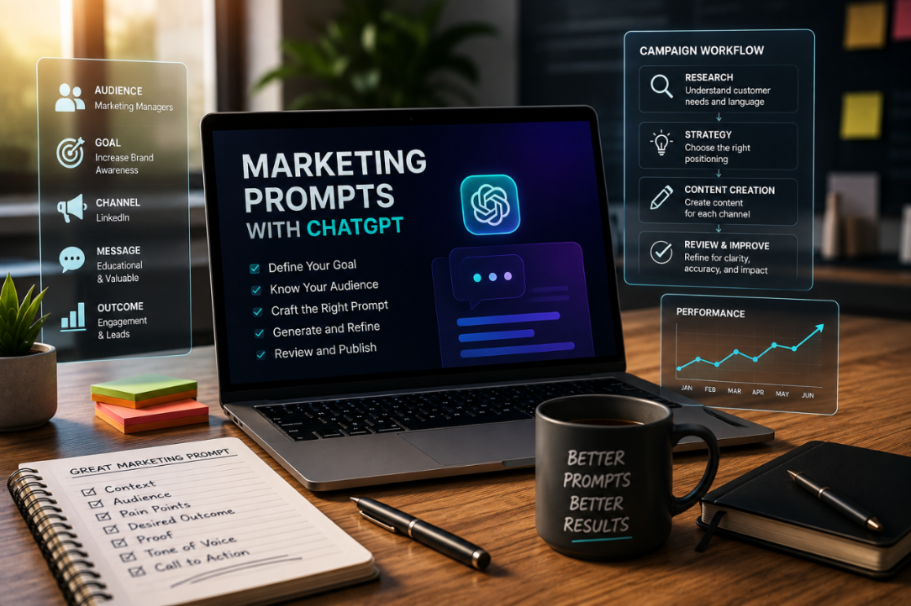
Provide the offer, audience, stage of awareness, channel, desired action, brand voice, proof points, and constraints. Ask ChatGPT to identify assumptions and missing evidence before producing final copy.
Build a campaign workflow
Use separate stages for research, strategy, production, and review. First summarize customer language and objections. Next choose a positioning angle. Then create channel-specific assets. Finally review the work against a checklist for clarity, specificity, credibility, and platform fit.
Example variables include [PRODUCT], [PRIMARY_AUDIENCE], [PAIN_POINT], [DESIRED_OUTCOME], [PROOF], [CHANNEL], and [CTA]. This structure lets a marketing team reuse the prompt while preserving campaign context.
Improve content rather than multiplying it
A content prompt should connect every asset to a customer question and a business goal. Request a clear thesis, supporting evidence, examples, internal links, and a distribution plan. For social media, ask for native hooks and formats instead of shortening the same post for every network.
Review every AI draft for factual accuracy, originality, claims, tone, and legal requirements. The model accelerates the workflow; the marketing team remains responsible for the final decision.
Frequently asked questions
Can ChatGPT create a full marketing strategy?
It can structure research and options, but people must validate evidence and make the final strategic decisions.
What inputs improve marketing copy?
Audience insight, offer details, proof, objections, channel context, voice, and a specific desired action.
Put the workflow into practice
Start with a prompt that matches your actual outcome, add specific context, and evaluate the result before using it. Explore the HookForge AI prompt marketplace or browse professional prompt categories.