Roblox Introduces AI-Powered Game Creation on Mobile
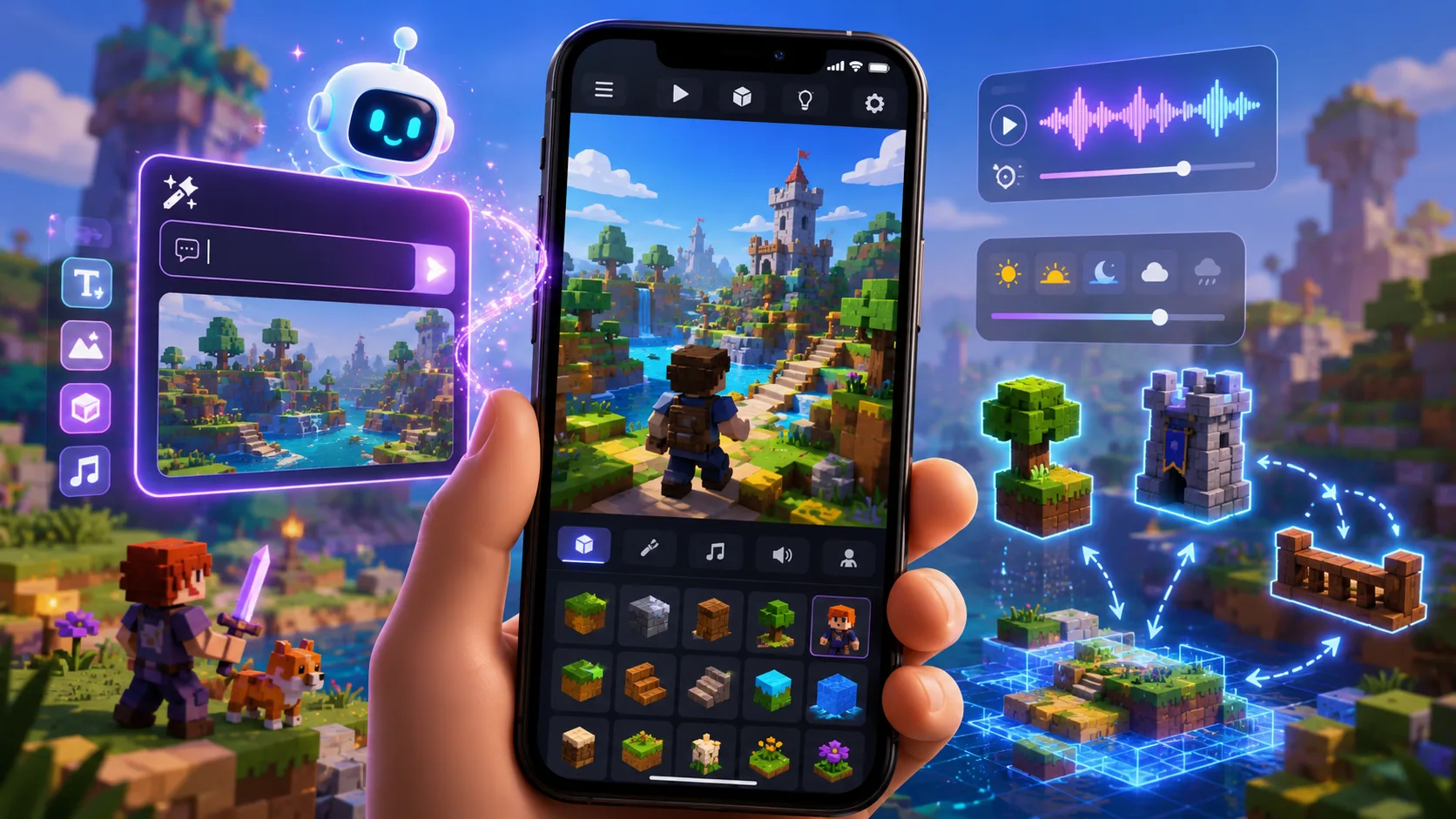
Roblox is launching Build, a new AI-powered mobile feature that turns simple text instructions into editable games without requiring programming experience.
Published by HookForge AI.
# Roblox Launches AI-Powered Mobile Game Creation with Build
Roblox is expanding its AI creation tools with a new mobile feature called Build, allowing users to generate basic game experiences from simple text descriptions.
The feature is designed to make game creation more accessible to people who have ideas but do not have programming or professional development experience.
## Create a Game from a Text Description
Users can describe the type of experience they want to build, and Roblox will generate an initial playable version.
For example, someone could request a cozy adventure set in a dense forest. Build can then help create:
- Gameplay mechanics
- Characters
- Environments
- Visual styles
- Sound
- Interactive elements
Users can continue editing the generated game and share it with friends.
Multiple AI Models Power the Experience
Roblox says Build uses a combination of proprietary Roblox technology and other AI models.
Rather than generating only visual assets, the system is designed to coordinate several parts of a game, including its world, interactions, appearance, and audio.
This moves AI-assisted game development closer to producing complete playable prototypes from natural-language instructions.
Concerns About Low-Quality AI Games
Making game development faster also creates a new challenge: platforms may receive large numbers of repetitive or low-quality AI-generated experiences.
Developers have raised concerns that creators may eventually compete not only with traditional studios but also with games that can be generated and published at much greater speed.
Roblox plans to address this through its existing discovery system.
Games that attract players and maintain strong retention may receive greater visibility, while experiences that users quickly abandon are less likely to be promoted.
In other words, AI may make publishing easier, but it does not guarantee that anyone will play the result.
Public Alpha Availability
The Build feature is expected to enter public alpha testing on July 28, 2026.
The initial release will be available in New Zealand to users aged nine and older who have completed age verification.
Users aged 16 and above may be allowed to publish their creations to a wider global audience.
Roblox plans to provide:
- A free basic version
- Additional paid options
Availability may expand after the initial testing period.
AI Agents for Testing and Analytics
Roblox is also developing AI agents that could assist creators with:
- Playtesting
- Gameplay analysis
- Performance insights
- Development recommendations
These tools could help identify problems before a game is published and provide creators with data about how players interact with their experiences.
Generating Editable 3D Scenes
Beyond Build, Roblox is working on broader generative AI systems for game development.
The company has previously explored AI tools for generating 3D assets and supporting developers through conversational assistance.
It is also developing scene-generation technology capable of creating complete, editable, and playable 3D environments from a single text instruction.
What This Means for Creators
For beginners, Build could lower the technical barrier to creating an early game prototype.
For experienced developers, it may accelerate repetitive production work and allow ideas to be tested faster.
However, successful games will still require:
- Original concepts
- Strong gameplay
- Careful editing
- Player testing
- Continued improvement
AI can shorten the path from an idea to a prototype, but it cannot replace product judgment or a compelling player experience.
Final Takeaway
Roblox Build represents another major step toward AI-assisted game development on mobile devices.
Its biggest advantage is accessibility: users can begin creating playable experiences without learning programming first.
The real measure of success will not be how many games the system generates, but whether creators can use it to build experiences that players genuinely want to return to.